
I’ve always believed my mornings in the garden were predictable. They follow a gentle rhythm: sunlight slipping over the fence, a soft breeze carrying the familiar scent of soil, and me stepping outside with a watering can in hand. It’s a routine that brings comfort — a quiet ritual that grounds the start of my day.
But on this particular morning, something subtle disrupted that rhythm and turned an ordinary moment into an unexpected lesson.
I had barely taken a few steps outside when a sharp, unfamiliar scent caught my attention. It drifted across the yard with surprising strength, stopping me mid-stride. At first, I assumed it came from a neighbor — maybe fertilizer or a new plant blooming. But the more I stood there, the clearer it became that the smell was coming from my own yard.
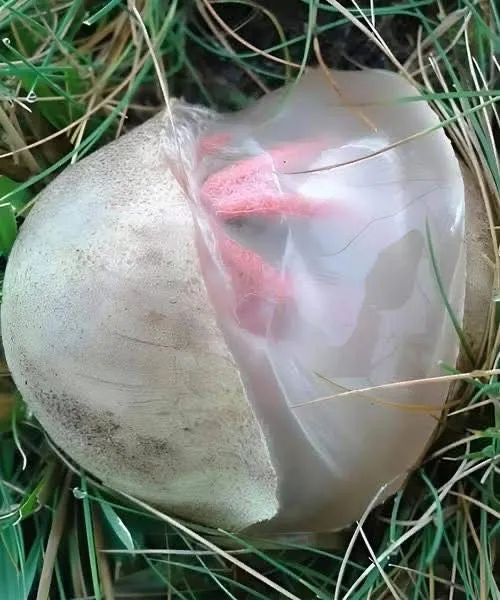
Following the scent, I walked toward the flowerbed expecting to find a fallen fruit or maybe an animal passing through. Instead, something unusual caught my eye: a small, irregular object sitting in the mulch, unlike anything I had seen in my garden before. Its shape was odd, its color muted but distinct enough to stand out among the greens and browns.
For a moment, I hesitated. There’s always a flicker of caution when encountering something unfamiliar outdoors. Was it harmful? Was it decaying? Or was it simply something new that nature had placed in my path?
Curiosity eventually outweighed hesitation. I crouched down carefully, not touching it. Even up close, the object remained puzzling — foreign, almost out of place. And that scent… earthy, pungent, and nothing like what I usually associate with my garden.
Not wanting to jump to conclusions, I took a photo and did a quick search. Within seconds, I found several matching results: it was likely a type of fungus that appears suddenly after damp weather and is known for its strong odor.
Everything aligned perfectly. We’d had several days of rain, the humidity had lingered, and fungi thrive under exactly those conditions. The strange shape, the sudden appearance, the overwhelming scent — it all made sense.
Instantly, the unease I felt shifted into curiosity.
The discovery no longer felt like a threat. It became something else entirely — a reminder that even the most familiar spaces can still surprise us.
My garden wasn’t just a place I tended. It was a living ecosystem with its own quiet changes, its own hidden habits, and moments that unfolded without my control. Nature doesn’t ask permission before shifting the script. Sometimes it simply offers something unexpected because that is how it grows, adapts, and evolves.
As I returned to watering the flowers, the morning felt different than when it began. I couldn’t stop thinking about how quickly uncertainty can shape our perceptions. One unfamiliar object had shifted my comfort, not because it was dangerous, but because it was unknown.
That moment reminded me of something simple yet deeply true: when faced with the unfamiliar, our first instinct is often discomfort. But if we pause and look calmly, confusion can turn into understanding.
In the end, that strange little fungus taught me more than I expected. It reminded me that the unexpected isn’t always a problem. Sometimes it’s part of a larger world we haven’t yet noticed. Sometimes it’s nature nudging us to pay attention. And often, when we’re willing to take a closer look, the unfamiliar becomes not frightening — but fascinating.
It started as an ordinary morning. It became an unexpected lesson. And all it took was one small mystery in the garden to remind me that even in life’s quietest routines, wonder is always waiting.
